Arthur L Samuel
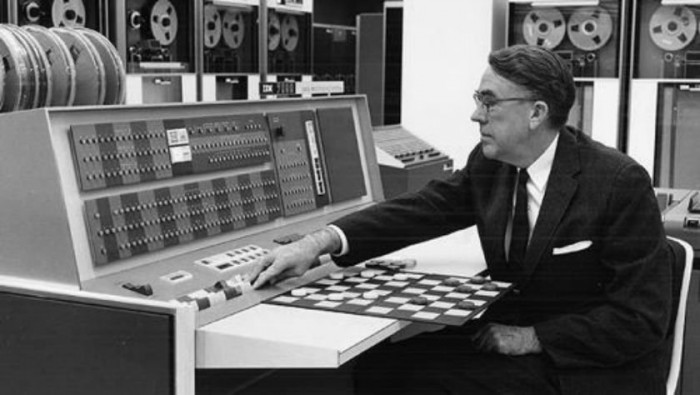
Arthur L Samuel was a pioneering computer scientist and visionary whose work quietly shaped the way machines learn and play.
The Life and Background of Arthur L Samuel
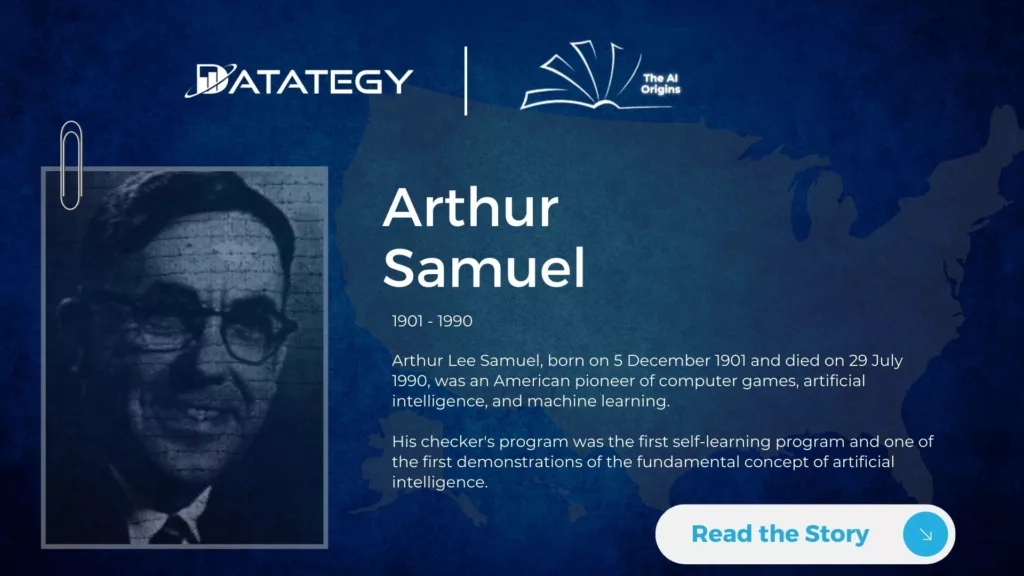
Arthur L Samuel was born in 1901 and grew up in a time when computers were mechanical curiosities rather than everyday tools. He studied at the Massachusetts Institute of Technology and later joined IBM, where he had the freedom to explore ideas that many of his contemporaries considered far ahead of their time. His career blended mathematics, engineering, and a healthy sense of curiosity, which allowed him to see potential where others saw only hardware and wires.
Throughout his professional life, Samuel worked at the intersection of hardware design and intelligent behavior. He understood that the true power of computing would come not just from faster arithmetic, but from systems that could adapt, generalize, and improve with experience. This philosophy guided his research and eventually gave rise to one of the most famous programs in the history of artificial intelligence, the checkers program that still stands as a landmark in machine learning.
Colleagues remembered him as a patient mentor who preferred thoughtful experimentation over hype. He built a culture of rigorous testing and careful observation, long before the term "scientific method" became fashionable in software research. His work environment at IBM provided stability and resources, but his success came from an internal drive to ask better questions about how machines could mimic aspects of human thought.
The Significance of the Arthur L Samuel Checkers Program
The checkers program written by Arthur L Samuel is often cited as one of the earliest demonstrations of machine learning. Rather than encoding every possible move by hand, he designed a system that could learn from recorded games and from its own experience. This approach introduced the idea of a learning algorithm that could evaluate board positions and improve over time, concepts that remain central to modern AI research.
At the heart of the program was an evaluation function that assigned a numerical score to a given board state. Samuel used a combination of manually crafted features and a sophisticated training process in which the weights of this function were adjusted based on actual game outcomes. This was an early example of gradient descent style optimization, long before the term became common in deep learning circles. The program played thousands of games against itself, refining its strategy in a way that closely mirrored deliberate practice in human experts.

What made Samuel's achievement remarkable was not just the novelty, but its performance. In matches against competent human players, the program demonstrated a level of skill that suggested genuine strategic understanding. It could recognize traps, plan several moves ahead, and adapt to different playing styles. These results helped shift the conversation about artificial intelligence from abstract theory to tangible, measurable progress, showing that learning could be engineered into software rather than being hard coded.
Machine Learning Concepts Before Machine Learning Was Cool
Long before "machine learning" became a buzzword, Arthur L Samuel articulated many of its core principles. He spoke about the need for systems that could generalize from limited data, a challenge that still drives research today. His checkers program is frequently referenced in academic courses as a foundational example of reinforcement learning-like behavior, where the agent improves through self play and feedback.
- Self improvement through repeated play, rather than static rule sets.
- Use of a parameterized function to evaluate game states, optimized via experience.
- Demonstration that complex behavior could emerge from relatively simple learning rules.
Samuel also emphasized the importance of measurable benchmarks, such as win rates and error reduction over time. By tracking these metrics across generations of play, he provided clear evidence that the system was learning. This focus on empirical validation helped establish standards that modern machine learning practitioners still rely on when comparing algorithms and models.

Influence on Artificial Intelligence Research
The legacy of Arthur L Samuel extends far beyond the sixty four squares of a checkers board. His ideas helped define the search for intelligent behavior in machines, influencing researchers who went on to develop more complex games, such as chess and Go. Techniques like pattern matching, heuristic evaluation, and self play training can all trace a conceptual lineage back to his early work.
In the broader field of artificial intelligence, Samuel's approach highlighted the value of domain specific knowledge combined with flexible learning mechanisms. He did not attempt to build a general problem solver, but instead focused on a well bounded task where progress could be clearly observed. This pragmatic choice allowed others to abstract his methods and apply them to new problems, from medical diagnosis systems to financial modeling.
Modern practitioners who experiment with neural networks, genetic algorithms, or automated planning may not realize how deeply their work echoes Samuel's insights. Yet the same principles of initializing a system, exposing it to data, and refining its internal parameters remain remarkably consistent. By framing learning as a computational problem rather than a purely symbolic one, he helped establish a research agenda that continues to thrive decades after his initial experiments.

Lessons from Arthur L Samuel for Today's Innovators
One of the most enduring lessons from Arthur L Samuel is the power of long term curiosity. He pursued questions about machine intelligence at a time when funding and public interest were focused elsewhere, laying groundwork that would later become central to entire industries. His career reminds us that foundational research, even in seemingly narrow domains, can have outsized impact when the right conditions emerge.
For modern developers and data scientists, Samuel's work offers a historical perspective on current trends such as deep learning and large language models. Many of today's headline grabbing systems rely on the same core ideas he explored, scaled up with more data and faster hardware. Understanding this lineage can inspire more thoughtful experimentation, encouraging practitioners to build on proven concepts rather than chasing every new architecture.
Finally, Samuel's emphasis on clarity, documentation, and reproducible results remains relevant. He treated his checkers program not as a one off demonstration, but as a platform for further inquiry. By carefully recording variations, parameters, and outcomes, he ensured that others could critique, extend, and improve upon his ideas. This collaborative mindset helped transform artificial intelligence from a niche pursuit into a vibrant, international discipline.

Conclusion on Arthur L Samuel's Lasting Legacy
Arthur L Samuel remains a pivotal figure whose ideas continue to resonate across artificial intelligence and machine learning. His checkers program demonstrated that machines could learn from experience, laying a foundation for countless later innovations. By studying his approach, contemporary researchers gain both historical insight and practical inspiration for building systems that adapt, generalize, and perform with increasing intelligence.
Arthur Samuel: The Visionary Who Taught Machines to Learn
Further information at: https://aivips.org/arthur-samuel/ Arthur Samuel, a name etched in the annals of artificial intelligence, is often ...
