Eldritch Horror
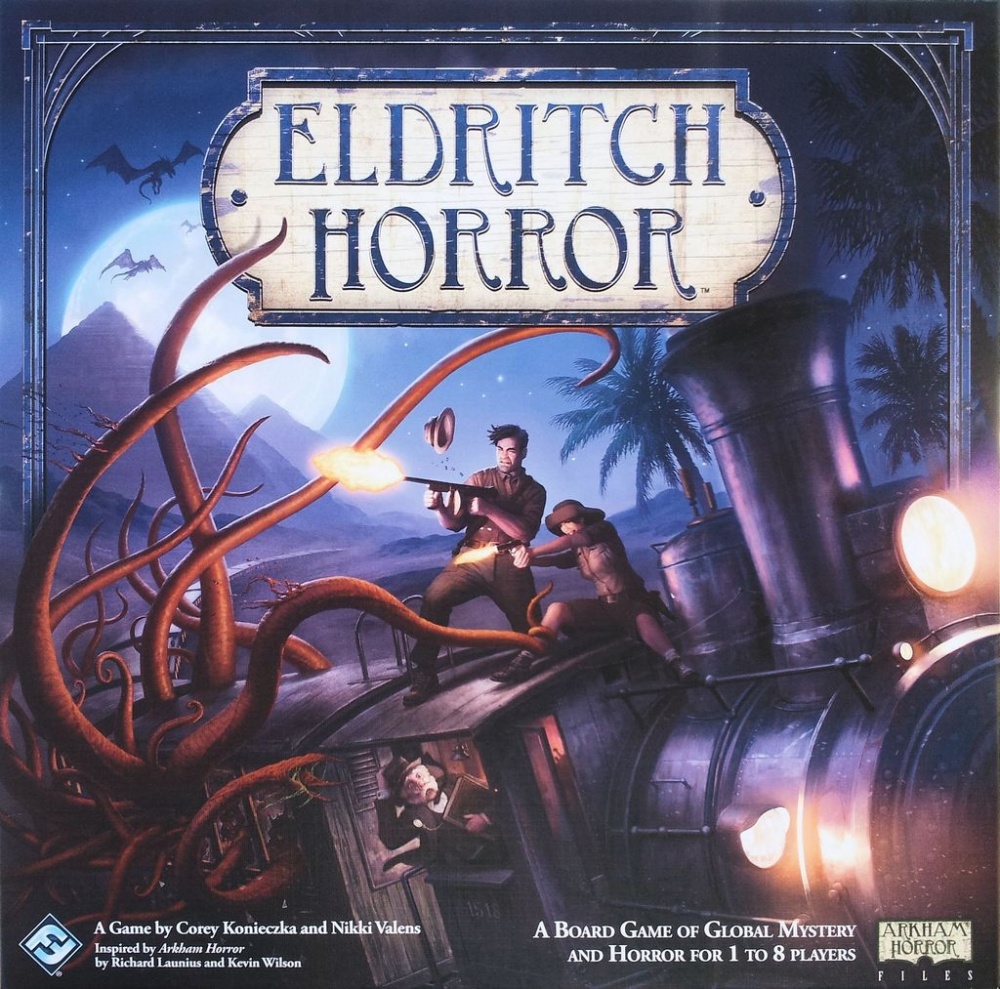
Eldritch horror seizes the imagination the moment the phrase appears in a whisper or a flickering screen title, evoking vast cosmic dread that bends minds and worlds alike. This particular kind of terror thrives on the feeling that the universe is not just indifferent but actively alien, and that human reason is fragile against forces whose motives and shapes no mind can fully grasp. In stories, games, and whispered campfire myths, eldritch horror reaches beyond simple monsters to suggest that reality itself is a thin veil over something unspeakable. Across genres and media, writers and creators lean into this mood, using shadow, ambiguity, and impossible geometry to make the unseen feel palpably present.
What Makes Eldritch Horror Different From Ordinary Fear
At its core, eldritch horror is not just about gore or jump scares, although it can certainly include them. It leans harder on existential unease, the sense that the cosmos is not designed with humanity in mind. Unlike a straightforward villain or a natural disaster, the threat often feels incomprehensible, operating by rules that may be unknowable or contradictory to human logic. This unknowable quality is central, because once the mind cannot fully categorize a threat, fear lingers longer and feels deeper.
Consider the difference between being chased by a wild animal and staring at a pattern that subtly shifts when you are not looking. The first triggers a clear survival response, while the second evokes a creeping, almost hallucinatory dread that questions perception itself. In eldritch horror, the enemy may be an ancient entity, a hidden dimension, or a forbidden truth that unravels sanity. The enemy is not merely powerful but alien, and that alien quality transforms fear into something philosophical and lasting.

Common Tropes and Imagery in Eldritch Horror
Certain images have become iconic within eldritch horror, from cyclopean cities older than civilization to non-Euclidean angles that hurt the eyes and the mind. Writers often describe these spaces as having impossible architecture, where corridors lead not only in the wrong direction but into states of confusion and disorientation. The sky might split open, or familiar landmarks twist into shapes that should not exist, hinting at a reality layered over reality. These visuals are not random; they are carefully chosen to destabilize the viewer’s sense of space and time.
- Ancient, slumbering entities that awaken without concern for human affairs.
- Fragments of forbidden knowledge that drive readers or characters to madness.
- Unsettling sensory details, such as colors that should not exist or sounds that echo from no direction.
- Blurred lines between dream and waking life, making it hard to trust one’s own memory.
Taken together, these motifs create a tapestry where the uncanny feels almost tangible. The reader or player senses that the rules of their everyday world no longer apply, and that revelation is at the heart of eldritch horror. Even the language used to describe these moments tends to be evocative rather than explicit, leaving gaps that the mind fills with its own fears.
The Role of Madness and Unknowable Truths
Madness is often less a side effect than the central engine of eldritch horror. Characters who glimpse too much of the underlying reality may not simply die; they may unravel, speaking incoherently, doubting their own senses, or quietly withdrawing from the world. This reflects a core idea: the human mind evolved to handle day to day survival, not the vast, indifferent machinery of the cosmos. When that machinery creaks into view, the mind can fracture under the weight of implications.

Unknowable truths sit at the heart of this genre. Rather than spelling out every detail, many stories hint at vast cosmic conspiracies or entities whose motives are as incomprehensible as their forms. Some narratives suggest that sanity is a useful illusion, and that the truth beneath it is far more unsettling. In this space, revelation is not liberation but a kind of curse, and the audience is left to wonder whether ignorance might have been a kinder fate.
Influences and Evolution of Eldritch Horror
Roots of eldritch horror run deep in literature and folklore, from ancient myths about capricious gods to Gothic tales that linger in ruined mansions. H. P. Lovecraft famously shaped modern expectations with his emphasis on cosmic scale and fragile human understanding, yet the tradition stretches well beyond his work. Folklore from many cultures contains spirits and forces that punish curiosity or trespass, foreshadowing the idea that some doors should not be opened. Over time, these ideas merged with emerging sciences like astronomy and later physics, producing a sense that the universe itself might be hostile or at least utterly indifferent.
In the twentieth and twenty-first centuries, eldritch horror has migrated into film, gaming, comics, and digital art, adapting to new technologies while keeping its core unease. Video games, in particular, allow players to interact with impossible spaces and subtle environmental storytelling, turning exploration into a kind of slow burn revelation. Streaming media and online communities have also helped these stories spread, because the eerie feeling of not quite understanding something is easy to share yet hard to pin down in words.
Why Eldritch Horror Resonates With Modern Audiences
In an era of rapid technological change and complex global systems, many people feel that familiar structures are fragile and that new forces are moving beyond easy comprehension. Eldritch horror taps into that intuition by presenting threats that are not simply human villains or natural disasters but something stranger and more ambiguous. Climate change, artificial intelligence, and vast economic networks can already feel like eldritch forces: powerful, poorly understood, and capable of reshaping daily life in ways that are hard to predict.
Art and entertainment give shape to these vague anxieties, turning them into monsters, glitches, and haunted landscapes that can be discussed, analyzed, and even laughed about from a safe distance. By externalizing fear into a narrative, creators allow audiences to process underlying unease without being overwhelmed by it. At the same time, the genre respects the intelligence of its audience, trusting them to sit with discomfort and draw their own conclusions rather than offering tidy resolutions.
Balancing Mystery and Payoff in Storytelling
Effective eldritch horror walks a fine line between withholding information and offering enough structure to keep the story engaging. Too much ambiguity can leave readers frustrated, while too much explanation can drain the mystery that makes the genre compelling. Skilled writers and designers often use fragments of lore, unreliable narrators, and shifting perspectives to maintain tension without collapsing the sense of the unknown.

When done well, moments of revelation feel earned, even if the full truth remains out of reach. A whispered name, a half-glimpsed silhouette, or a change in the color of the sky can carry more weight than a lengthy exposition because it hints at a deeper pattern the audience senses but cannot fully confirm. This restrained approach keeps the horror alive in the space between what is shown and what is imagined, allowing each mind to craft its own version of the lurking threat.
Embracing the Unease as a Creative Force
For creators and fans alike, eldritch horror offers a way to explore fear as something more than a simple reaction. It invites questions about perception, knowledge, and the limits of understanding, turning entertainment into a kind of philosophical experiment. By embracing discomfort and ambiguity, storytellers can craft experiences that linger long after the screen fades to black or the last page is turned.
Whether through quiet atmospheric dread or sudden, mind bending twists, the strength of eldritch horror lies in its ability to make the familiar strange without breaking it completely. It reminds us that the universe is vast, strange, and at times unsettling, and that stories are one of the few tools we have to stare back into that darkness without looking away. In facing the eldritch, we sharpen our imagination, our empathy, and our appreciation for the carefully crafted shadows that haunt our favorite tales.

In the end, eldritch horror endures because it speaks to a deep and persistent curiosity about what lies beyond the edge of understanding. It invites us to question, to wonder, and to feel small in the presence of something immense, while still appreciating the craft that turns that smallness into a powerful, unforgettable experience.
Como jogar Eldritch Horror em 10 minutos - The Rules Girl
A Garota das Regras está de volta com seu vídeo mais longo até agora: aprenda a jogar Eldritch Horror, um jogo cooperativo de ...
