Mixed Conditionals

Understanding mixed conditionals is essential for expressing complex ideas about situations in the past, present, or future that did not happen.
What Mixed Conditionals Really Mean
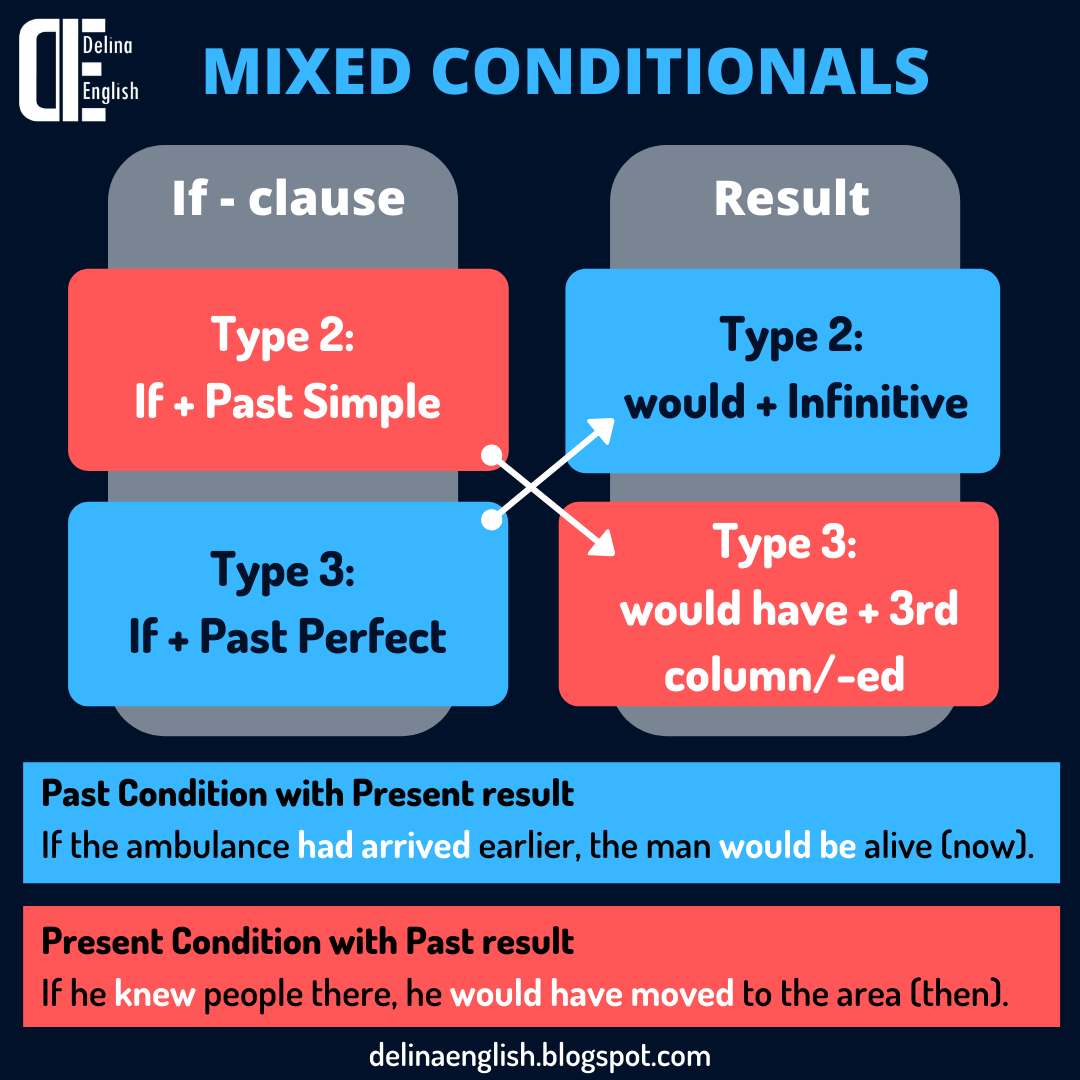
Mixed conditionals combine elements from different time frames in the if-clause and the main clause, allowing you to talk about hypothetical situations and their imagined consequences across time. While zero and first conditionals handle real or possible situations, and the second conditional deals with unreal present scenarios, mixed conditionals break that pattern by linking, for example, a past condition to a present result or a present condition to a past result. This flexibility makes them powerful tools for nuanced storytelling, speculation, and regret.
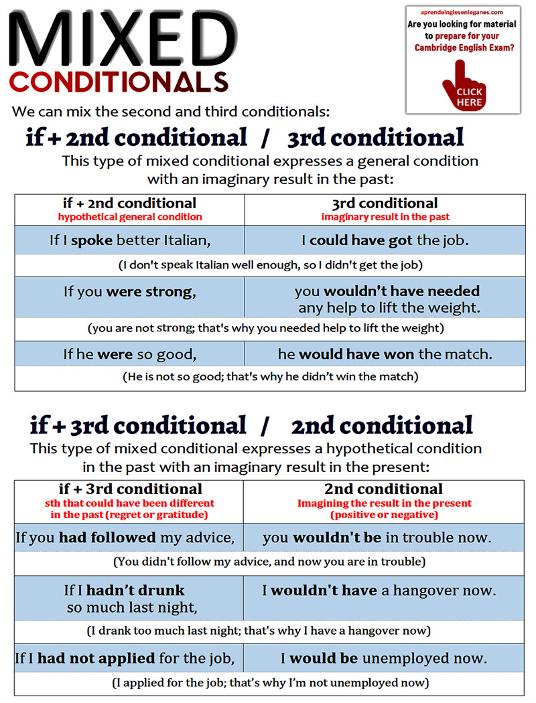
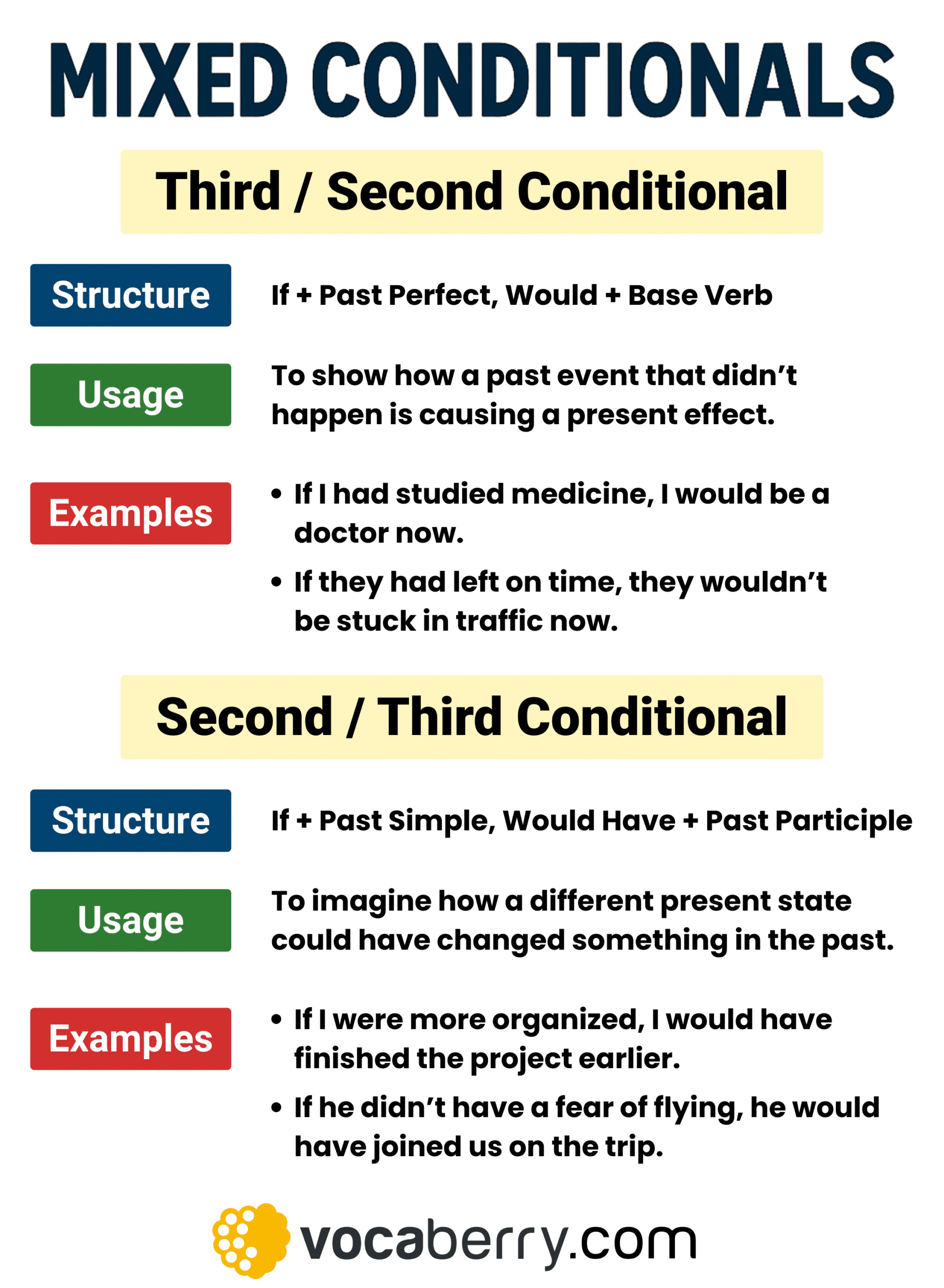
In practice, you will mostly encounter two common mixed structures: the past condition, present result type and the present condition, past result type. The first suggests that something in the past was different, so the present situation would be different if that past event had unfolded otherwise. The second suggests that a current reality prevents an imagined past outcome, highlighting the emotional weight of missed opportunities or hypothetical achievements.
Past Condition, Present Result Structure
This structure speculates on how the present would be different if something had happened in the past. It typically uses the past perfect in the if-clause and would plus the base verb in the main clause to describe the current hypothetical state. This pattern is extremely useful for reflecting on life choices, learning from mistakes, or imagining an alternate reality shaped by a single changed decision.
For example, saying If I had studied harder, I would be a doctor now links a past action (not studying) to a present identity (not being a doctor). The speaker is not talking about becoming a doctor in the future, but about a present truth that exists because of a past choice. This structure often carries a tone of regret, criticism, or admiration, depending on the context and the speaker’s attitude toward the situation.
Common Patterns and Examples
- If + past perfect, would + base verb — If she had taken the job in Berlin, she would speak German fluently today.
- If + past perfect, would have + past participle — This variation is less common in pure mixed conditionals but can appear when the result is imagined in the past rather than the present.
- Unless, without, but for — These conjunctions and prepositions can replace if to create the same hypothetical effect, such as But for your help, I would never have finished that project.
Notice how the speaker focuses on an imagined present fact that exists only because the past condition was not met. This structure invites the listener to understand the cause-effect relationship across time, making abstract reasoning feel concrete and personal.

Present Condition, Past Result Structure
The opposite pattern uses a present or general condition in the if-clause and a perfect infinitive or perfect modal in the main clause to express regret or wonder about a past outcome. Here, the current reality is accepted as fixed, and the speaker imagines what might have happened under different present circumstances. This creates a poignant contrast between what is and what could have been.
Consider the sentence If I were taller, I would have played professional basketball. The speaker is not tall now, so they imagine a past career that was impossible because of their current physical limitation. The structure highlights missed chances and can reflect ambition, envy, or philosophical reflection on how circumstances shape life paths.
Emotional Nuance and Usage Tips
- These conditionals often carry emotional weight, such as wish, regret, or envy.
- They are common in storytelling, memoirs, and reflective conversations.
- The verb would can sometimes be replaced with could or might to express ability or possibility rather than certainty.
By mastering this structure, you can articulate subtle feelings about history and identity, turning simple statements into layered reflections on cause and effect. Whether you are discussing a personal decision, a historical event, or a fictional scenario, this pattern helps you bridge time with precision and emotional depth.
![A Simple Guide to Conditionals [English Grammar] - TED IELTS](https://cdn.shortpixel.ai/spai/q_lossy+ret_img+to_webp/https://ted-ielts.com/wp-content/uploads/2022/10/mixed-conditional.png)
Contrasting Mixed Conditionals with Simple Structures
It is helpful to compare mixed conditionals with their simpler counterparts to appreciate their unique function. A second conditional sentence like If I won the lottery, I would buy a house refers to an unlikely present situation and its imagined present result. A third conditional, such as If I had won the lottery yesterday, I would have bought a house, refers to a past situation and its imagined past result.
Mixed conditioninals break this neat alignment by mismatching the time frames. If I won the lottery, I would have bought a house suggests that the speaker still lacks a house because they did not win the lottery in the past, even though the condition refers to a present possibility. This subtle shift allows you to connect different moments in time and express more sophisticated ideas about cause, responsibility, and regret.
Common Mistakes and How to Avoid Them
Learners often confuse mixed conditionals with third conditionals or overuse them in casual speech. A typical error is using the simple past instead of the past perfect in the if-clause, which can change the meaning or make the sentence sound incorrect. For instance, saying If I would have known is a common mistake; the correct form is If I had known.
To avoid these pitfalls, focus on clearly identifying the time of the condition and the time of the result before choosing your verb forms. Practice by creating sentences that link a past action to a present feeling or a present situation to a past opportunity. With time, recognizing and producing these structures will become more intuitive, allowing you to use mixed conditionals naturally in both written and spoken English.
Practical Applications and Everyday Use
Mixed conditionals appear frequently in conversations about personal history, career paths, relationships, and hypothetical scenarios. They are especially common in interviews, storytelling, coaching, and counseling, where understanding the link between past decisions and present emotions is valuable. By using these structures, you can show empathy, analyze choices, or explore alternative realities in a sophisticated way.
You can also incorporate them into your writing to add depth to characters, clarify motivations, or build tension around pivotal moments. Whether you are drafting a personal essay, a narrative story, or a reflective blog post, mixed conditionals give you the grammatical tools to connect time, consequence, and emotion in a clear and compelling manner.
Mastering mixed conditionals ultimately enhances your ability to think and communicate across time, turning simple hypotheticals into rich explorations of cause and effect. As you practice, you will find that these structures not only improve your grammar but also deepen your expressive power in any language context.
Mixed Conditionals | English Grammar | Examples & Practice
Do you know much about MIXED conditionals? Find out how to use this interesting English grammar & practice with me! Watch ...
