Past Perfect Continuous
Understanding the past perfect continuous is essential for expressing how long an action had been in progress before another past event occurred.
What is the Past Perfect Continuous Tense
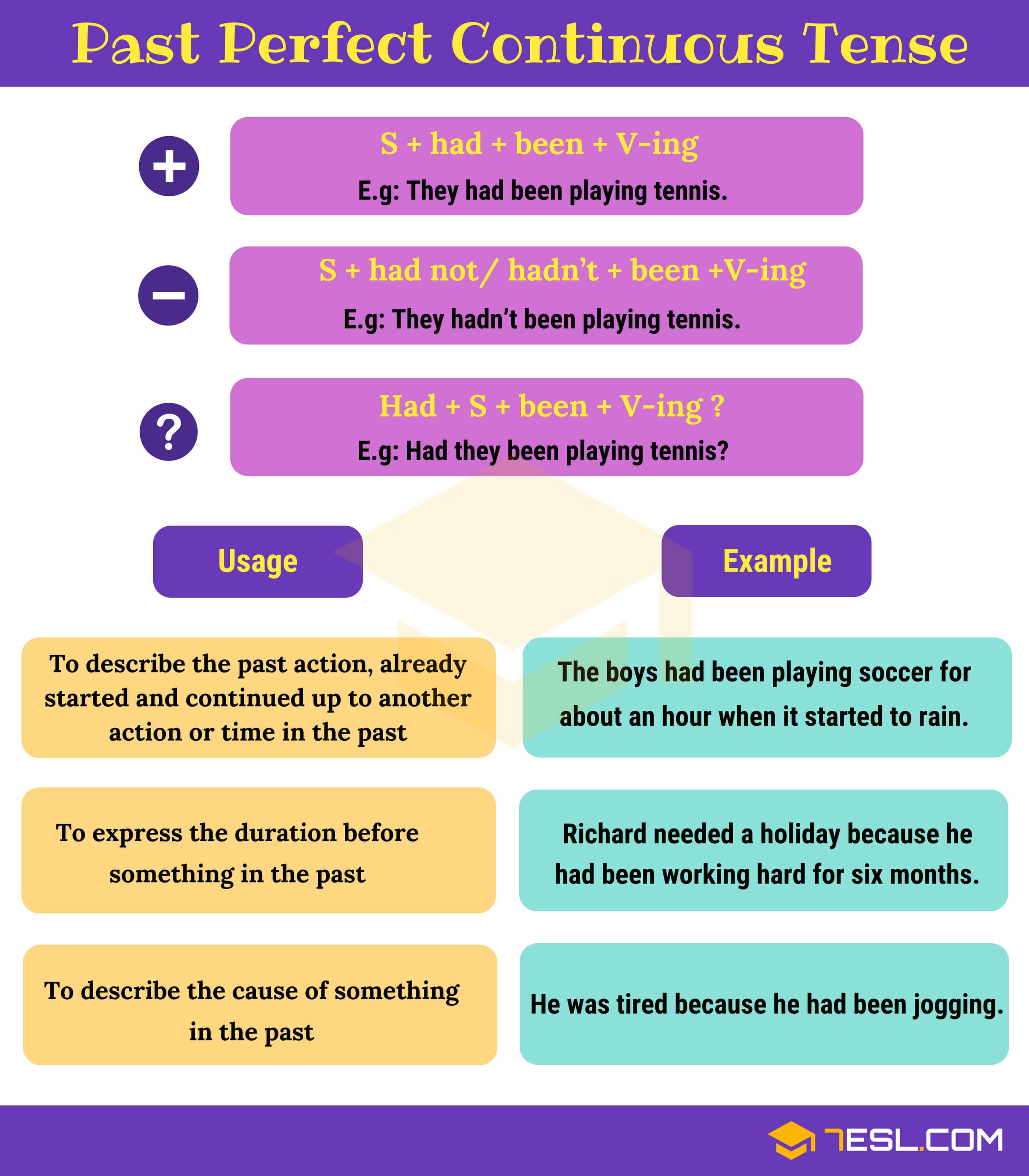
The past perfect continuous is a verb tense used to describe an action that started in the past, continued for a duration, and was still ongoing or had just stopped when another past action or time interrupted it. It is formed with had + been + the present participle (verb+-ing). This structure highlights the duration and continuity of the action rather than its completion. You will often see it paired with time expressions such as for two hours, since morning, or all day to clarify how long the activity had been happening. Recognizing these time markers helps you identify when the past perfect continuous is the most natural choice in a sentence.
In everyday English, this tense is less common than the simple past, but it adds precision when you need to explain the background or context of a past situation. Imagine you are describing why someone was tired; you might say, She had been working for twelve hours before she went to bed. The focus here is on the extended period of working, not just the single act of working. By using the past perfect continuous, you show that the effort built up over time and likely contributed to the result you are describing. This makes your storytelling more vivid and accurate.
How to Form the Past Perfect Continuous
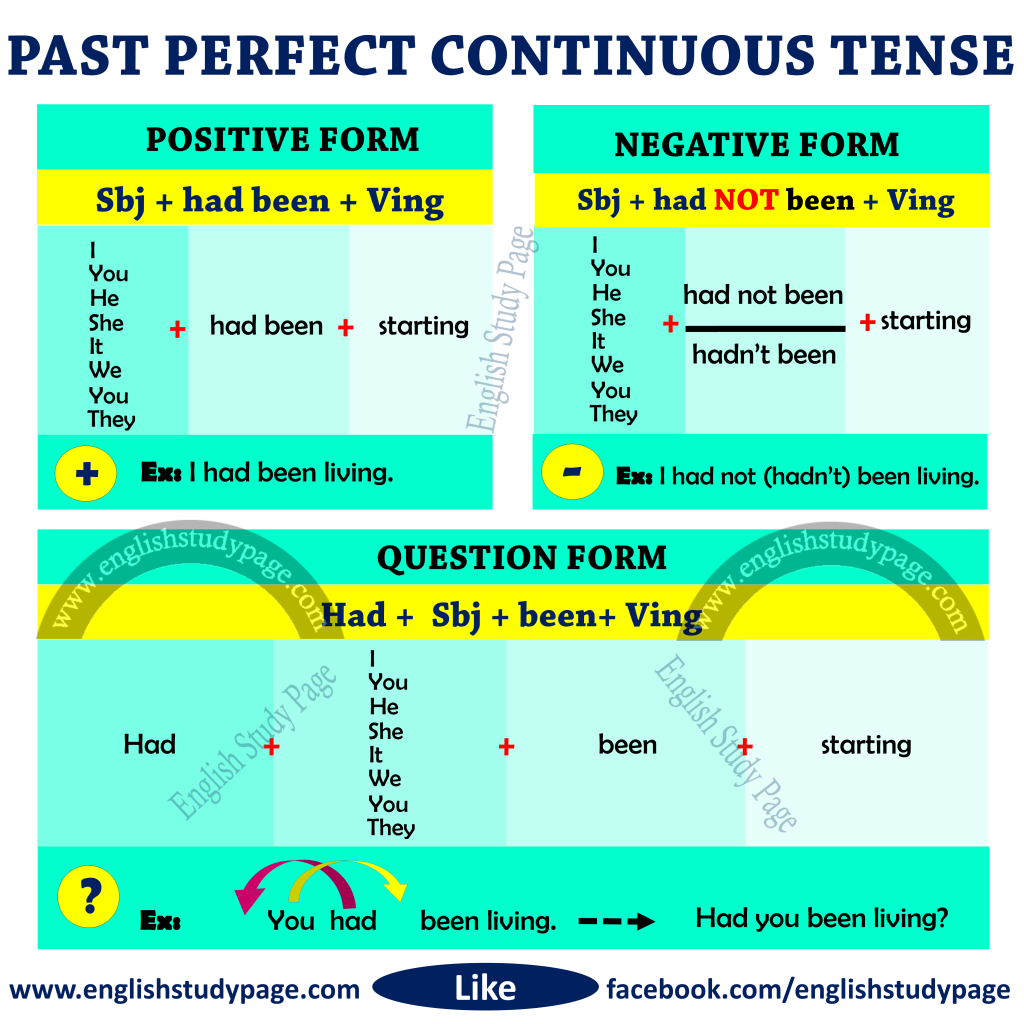
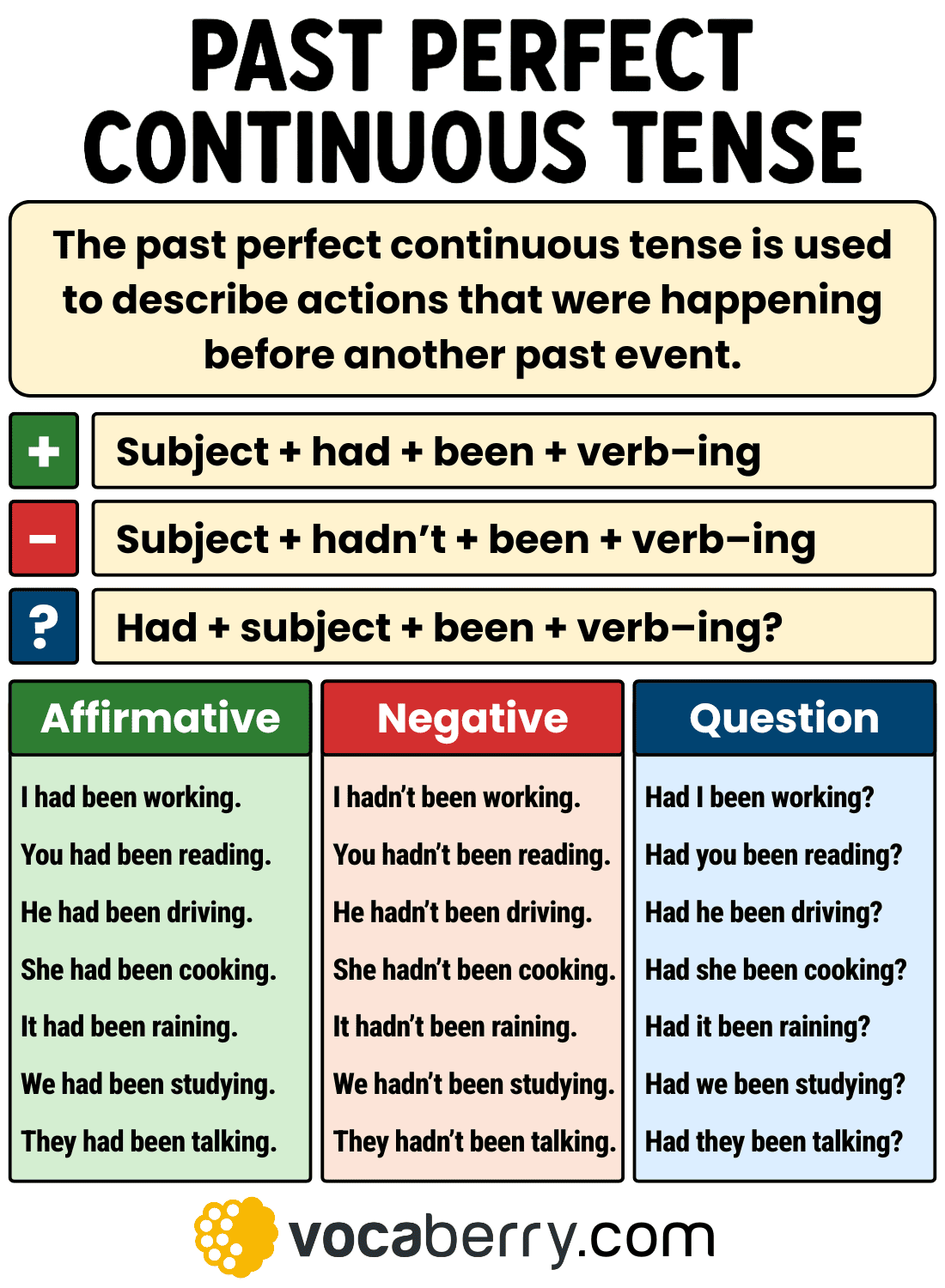
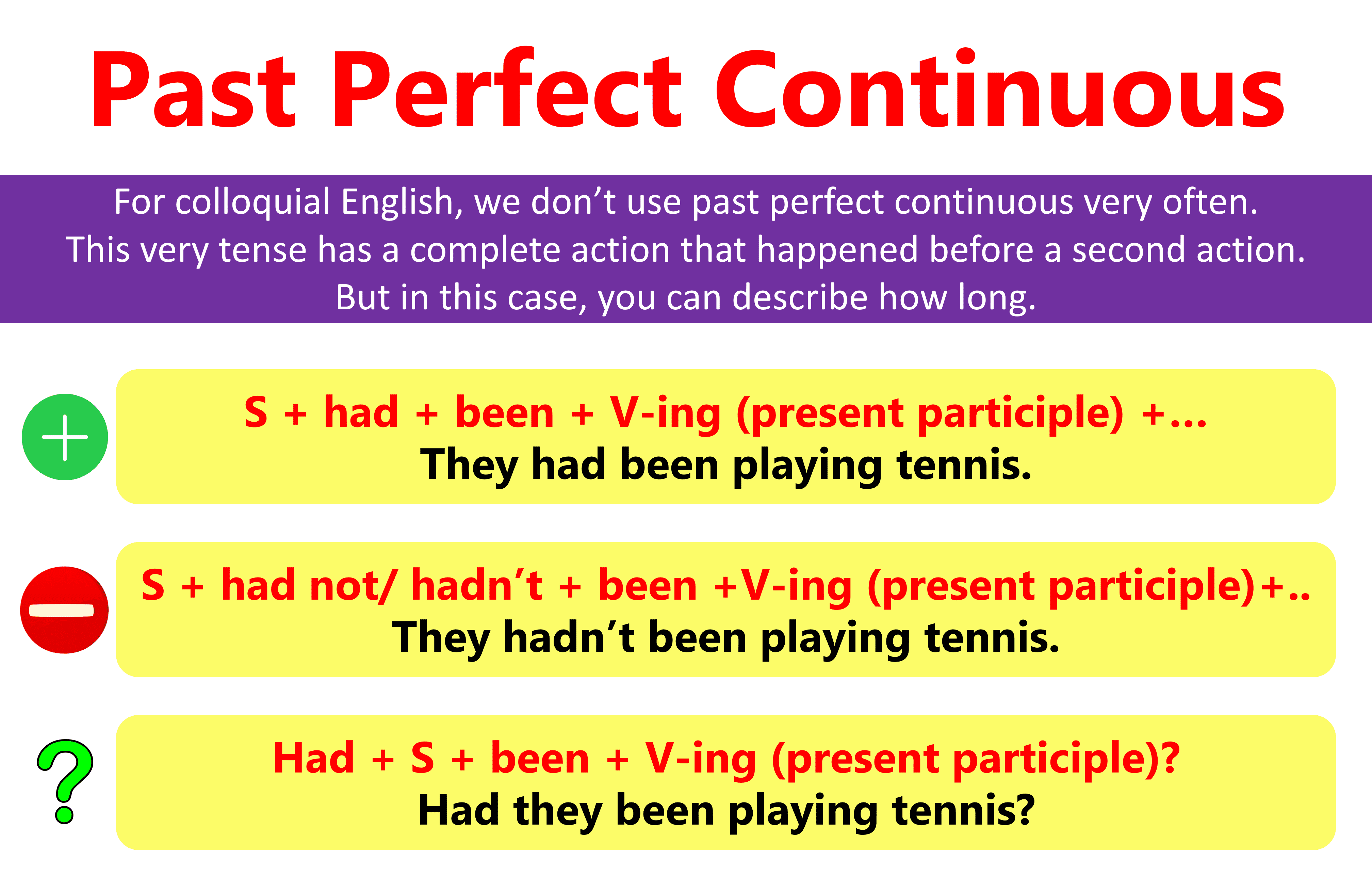
To construct the past perfect continuous, you always start with had, followed by been, and then the -ing form of the main verb. For regular verbs, this simply means adding -ing, while irregular verbs may change their spelling, such as run becoming running or see becoming seeing. Negative sentences require not after had, and questions are formed by inverting had with the subject. Paying attention to these small structural details ensures clarity and correctness, especially in more formal writing or professional contexts.
Here are a few examples that show the structure in context:
- Affirmative: I had been studying English for three years before I moved to London.
- Negative: She had not been waiting long when the bus finally arrived.
- Question: Had they been driving for hours when you saw them?
Notice how the focus stays on the ongoing nature of the activity. The past perfect continuous often feels more dynamic than the past perfect simple because it paints a picture of an action in progress. This can be particularly useful when you want your listener or reader to feel the length and depth of the situation you are describing.
When to Use the Past Perfect Continuous
You should use the past perfect continuous when you need to emphasize the duration of an action that was happening before another past event. This tense is ideal for showing cause and effect, where the earlier activity explains the later state or result. For example, He was tired because he had been working all day links the reason for his tiredness directly to the long period of work. Without the past perfect continuous, the connection between cause and effect would be less clear.
Common time expressions that often appear with this tense include for, since, all day, all morning, and before. These markers help the listener understand the timeline and the continuity of the action. Using them consistently in your speech and writing trains your mind to choose the past perfect continuous naturally when describing extended past actions that lead to a specific point in the past.
Common Mistakes and How to Avoid Them
Learners sometimes confuse the past perfect continuous with the past perfect simple, leading to sentences that focus on completion rather than ongoing action. For instance, saying He had lived in Paris for ten years is correct, but it does not highlight the continuous aspect. If you want to stress that he was still living there and perhaps doing so actively, He had been living in Paris is more precise. Understanding this subtle difference helps you choose the form that matches your intended meaning.

Another frequent error is omitting been and using had + -ing directly, which changes the structure and can confuse listeners. Remember that had been is a necessary part of the past perfect continuous construction. Regular practice with timelines and short writing exercises can reinforce the correct pattern. By noticing real-life examples in movies, books, and conversations, you gradually internalize when this tense feels natural and accurate.
Practical Examples in Context
Imagine two friends catching up after a trip. One might say, You looked exhausted. Had you been traveling long before you finally arrived? Here, the past perfect continuous explains why the person appeared worn out. In a work setting, a manager could say, The system had been running slowly all morning, so we decided to restart it. This not only identifies the problem but also justifies the action taken at that moment. These everyday situations show how the past perfect continuous adds depth and clarity to your storytelling.
Writers and speakers often use this tense to build suspense or set the scene before a key event. By describing background conditions, you invite your audience into the moment and help them understand the emotional or situational context. Whether you are describing a rainy afternoon, a long journey, or a heated argument, the past perfect continuous gives you the tools to make your past narratives richer and more engaging.
Tips for Mastering the Past Perfect Continuous
To improve your use of the past perfect continuous, start by listening for it in conversations and media. Pay attention to how native speakers link duration to past events and notice the time expressions they use. Practicing with timelines can also help you visualize which action started earlier and which followed, making it easier to choose the correct tense. Writing short paragraphs about your day or recent events, then rewriting them with the past perfect continuous, reinforces the structure in a practical way.
Consistency is key, so try to incorporate this tense into your speaking and writing regularly. Over time, it will feel more intuitive, and you will naturally select it when you want to highlight ongoing past actions. Combining the past perfect continuous with other tenses correctly allows you to express complex ideas smoothly and confidently. With patience and practice, you will find that this tense becomes a valuable part of your grammatical toolkit.
Mastering the past perfect continuous enriches your ability to describe past events with precision, making your English more nuanced and expressive.

What's the Difference? PAST Continuous & PAST PERFECT Continuous 🤔
Do you know when to use the past continuous & past perfect continuous? What's the difference? These English tenses are similar, ...
