Personas Non Gratas
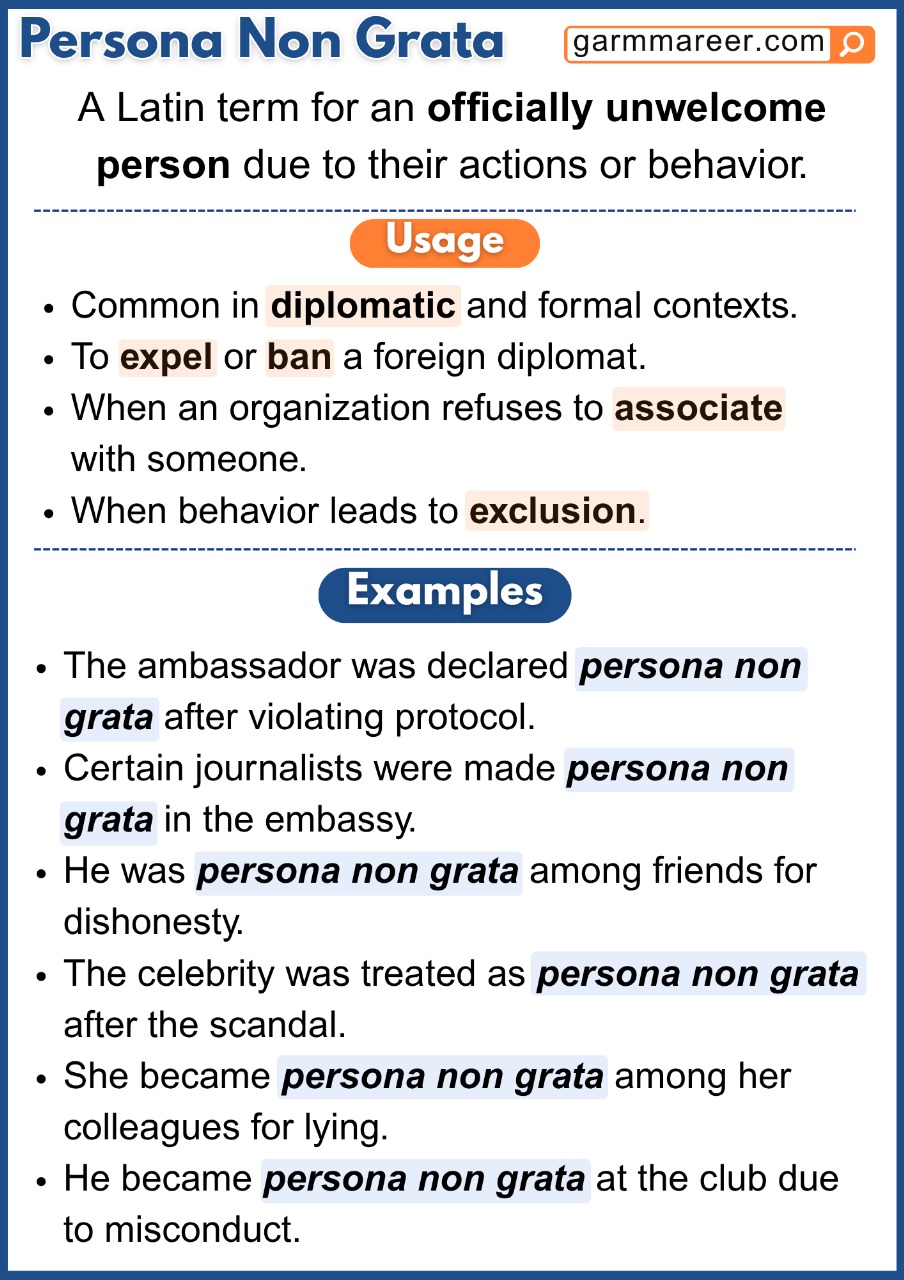
In the delicate world of diplomacy and international relations, the status of a persona non grata serves as a powerful legal instrument to protect national interests and maintain order. This Latin term, meaning “unacceptable person,” designates an individual, typically a diplomat or foreign agent, who is declared unwelcome and must leave the host country, often with immediate effect. The concept exists to safeguard sovereignty, security, and the integrity of bilateral ties, allowing nations to respond decisively when trust is broken or conduct violates the principles of reciprocal representation. Understanding how a persona non grata is declared, the consequences of such a designation, and the historical precedents that shape this practice reveals much about the balance of power and protocol in global affairs.
The Legal Basis and Declaration Process
At its core, the declaration of a persona non grata is rooted in the Vienna Convention on Diplomatic Relations of 1961, which forms the cornerstone of modern diplomatic law. According to Article 9, the receiving state may, at any time and without needing to explain its decision, declare any member of the diplomatic staff persona non grata or otherwise unacceptable. This provision grants the host nation a broad and almost absolute discretion to expel diplomats or foreign officials it deems undesirable, effectively ending their immunity from prosecution for acts performed in an official capacity once they leave the territory. The declaration is typically delivered through a formal diplomatic note, specifying the individual’s name and the reason—or lack thereof—behind the decision.
The process is swift and carries significant weight, as it is not a mere request but a definitive order that must be complied with. The affected individual is usually given a short window, often just a few days, to leave the country, and their accreditation is formally withdrawn. This mechanism ensures that diplomatic channels remain functional and that disputes over personnel can be resolved without escalating to more severe confrontations. It is a tool of last resort, used when continued presence is seen as a threat to national interests or when the relationship between states has deteriorated beyond a point of comfortable cooperation.

Common Triggers for Becoming a Persona Non Grata
While the reasons for declaring someone a persona non grata can be highly specific and sensitive, several recurring patterns emerge in diplomatic practice. Espionage, the gathering of classified information under the guise of diplomatic cover, is one of the most frequent causes, as it directly undermines national security. Similarly, involvement in political interference, such as alleged support for opposition groups or attempts to influence internal elections, can swiftly lead to expulsion. Host countries view such actions as a violation of the non-intervention principle that governs international relations.
Other triggers include:
- Engaging in activities incompatible with the diplomat’s status, such as serious criminal offenses or involvement in local disputes.
- Conducting intelligence operations or recruiting local agents without authorization.
- Publicly criticizing the host government in a manner deemed unacceptable or inflammatory.
- Being implicated in espionage or sabotage.
In many cases, the decision is driven by a broader diplomatic crisis, where expelling a diplomat becomes a symbolic and practical response to a perceived affront. It serves as a measured but firm way to express disapproval without severing all diplomatic ties immediately.

Consequences and Implications for the Individual
For the individual designated as a persona non grata, the consequences are immediate and profound. The primary outcome is the loss of diplomatic immunity within the host country, exposing them to potential legal prosecution for any alleged crimes committed while accredited. However, in practice, the host state usually opts for a swift and orderly departure to avoid further escalation. The individual’s ability to function in that country is completely nullified, as they are stripped of the right to reside, work, or engage in any official capacity.
Beyond the legal and practical repercussions, being declared a persona non grata carries a significant professional and reputational cost. It signals a severe break in trust and can blacklist the individual from future diplomatic postings or international engagements. Colleagues and host governments may view the designation as a mark of unreliability or misconduct. For diplomats, this stigma can be career-limiting, as it raises questions about judgment and adherence to the rules of diplomatic conduct. The move is rarely just a routine administrative action; it is a personal and professional setback with long-lasting echoes.
Historical Examples and Diplomatic Impact
Throughout history, the declaration of a persona non grata has played out in notable and often tense chapters of international relations. One well-documented instance occurred during the Cold War, when both the United States and the Soviet Union frequently used expulsions to retaliate against perceived spying or political interference. These tit-for-tat expulsions became a common, albeit chilly, method of managing rivalry without direct military confrontation. The expulsion of diplomats served as a clear message of discontent while keeping lines of communication open enough to prevent total breakdowns.

More recently, high-profile cases have involved diplomats accused of espionage or interference in domestic politics. In some instances, entire consular staffs have been ordered to leave in response to systemic violations. These events highlight how the persona non grata mechanism is not just a historical artifact but a living tool used to enforce contemporary standards of diplomatic behavior. The impact extends beyond the individual, influencing the broader climate of trust and cooperation between nations, and reminding all parties of the boundaries of acceptable conduct in international diplomacy.
Broader Significance in International Relations
The institution of the persona non grata reflects a fundamental truth about diplomacy: it operates on the basis of mutual consent and respect. The host country must grant accreditation in the first place, and by revoking it, they assert their sovereignty and right to control who operates within their borders. This reciprocal understanding ensures that diplomatic missions can function while providing a safety valve for disputes. It allows nations to manage their relationships dynamically, addressing misconduct without necessarily resorting to full-scale diplomatic ruptures.
Understanding the nuances of the persona non grata concept helps explain the delicate choreography of international interactions. It is a mechanism that balances the need for open dialogue with the protection of national interests. By providing a clear and codified way to remove unwanted individuals, it maintains the stability of diplomatic relations even during periods of tension. Ultimately, it underscores that while engagement is essential, so too is the sovereign right to refuse participation when standards are not met.

The declaration of a persona non grata remains a critical instrument in the toolkit of modern diplomacy, allowing states to uphold standards of conduct and security with precision. While often seen as a stark measure, it reinforces the framework of international law and mutual respect that makes cross-border engagement possible. Its continued use demonstrates that even in an interconnected world, nations retain the authority to determine who is welcome within their borders and who must depart.
VEN1 - PERSONA NON GRATA
CREDITS Réalisation : Seveneyes DA : Nouvomonde Mix /Master : Russel Compo : Skary / Wyskobeats.
