Second Conditional

Understanding the second conditional is essential for speaking and writing English like a native speaker, especially when you want to talk about hypothetical situations and imagined results in the present or future. This grammatical structure helps you express possibilities that are unlikely, purely imaginary, or simply not true right now, and it shows up everywhere in conversations, stories, and even business discussions. In this overview, you will discover how the second conditional works, why it matters for fluency, and how you can start using it naturally in your own sentences.
How the second conditional is formed
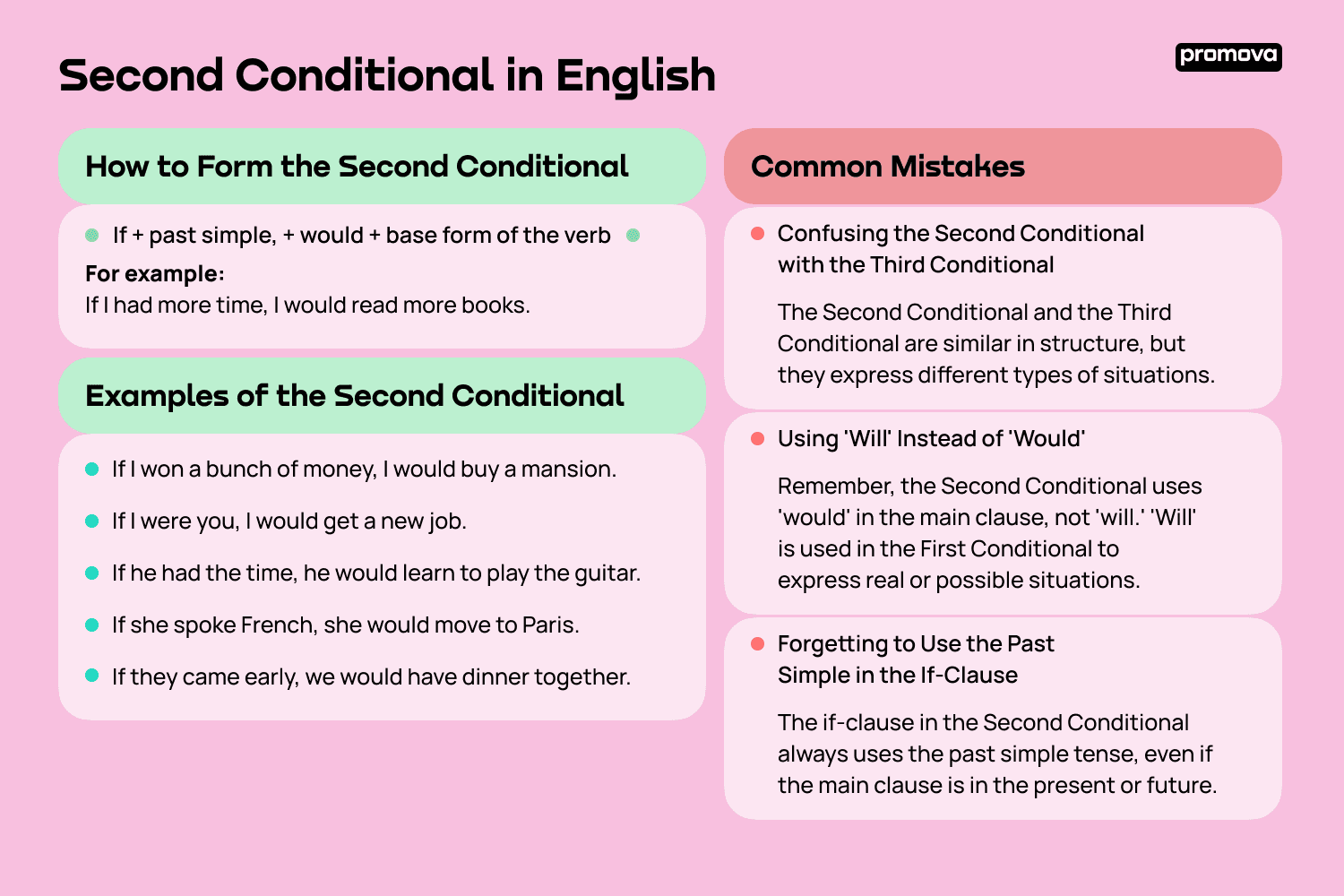
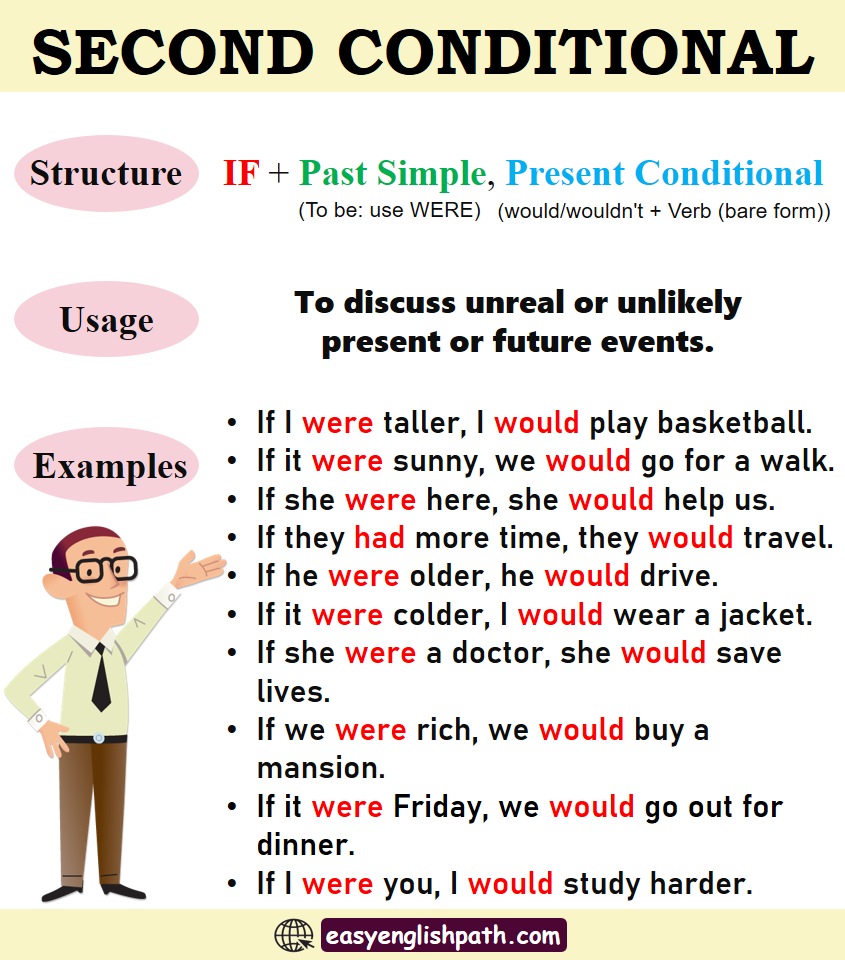
The second conditional follows a simple and predictable pattern that makes it easy to master once you see it clearly. In the if clause, you always use the simple past tense of the verb, even though you are talking about the present or future, while the main clause uses would followed by the base form of the verb. This contrast between past tense in the condition and would in the result creates the unreal or hypothetical feeling that defines this structure.
For example, in the sentence If I had time, I would travel more, the word had is the simple past of have, and would travel shows the imagined action that depends on that condition. You can replace the subject with he, she, it, or they, and the pattern stays the same, using had in the if clause and would in the main clause. Negative forms are created by adding not, giving you structures like if he did not know the answer and he would not say anything, which are very common in everyday English.
The difference between first, second, and third conditionals
Many learners confuse the second conditional with the first and third conditionals, but each form has a clear time frame and level of reality. The first conditional talks about real and possible situations in the future, using present tense in the if clause and will in the main clause, while the second conditional focuses on situations that are unlikely, imaginary, or simply not true right now. The third conditional, on the other hand, refers to past situations that did not happen and their imagined results, using had finished in the if clause and would have finished in the result clause.
- First conditional: If it rains tomorrow, I will stay at home, describing a real possibility.
- Second conditional: If it rained tomorrow, I would stay at home, describing an imaginary or unlikely situation.
- Third conditional: If it had rained yesterday, I would have stayed at home, describing an unreal past situation.
By paying attention to time and reality, you can choose the right conditional and avoid mixing up these structures in speaking and writing.
Common uses of the second conditional
Native speakers often use the second conditional to explore dreams, wishes, and changes they would make if their circumstances were different. It is a polite and gentle way to imagine alternatives, whether you are talking about your career, relationships, travel plans, or daily habits. Because these situations are not real or certain right now, the past tense in the if clause softens the request or suggestion and makes it sound less direct.
In business and academic contexts, the second conditional can help you discuss ideas, propose changes, and consider hypothetical outcomes without committing to them. For instance, you might say If we reduced our prices, we would attract more customers or If the project received more funding, it would succeed faster, which allows you to test possibilities in a careful and professional way.
Vocabulary and phrasing commonly used with the second conditional
Certain words and phrases often appear alongside the second conditional and can help you recognize and create these structures more naturally. Words like imagine, suppose, pretend, and wish signal that you are moving into hypothetical territory, while expressions such as if only and if I were you highlight regret, advice, or empathy. These markers make it easier to identify when someone is talking about an imagined scenario instead of a real plan.
Typical patterns include:

- If I were rich, I would buy a house by the sea.
- If she studied more, she would pass the exam.
- If they arrived earlier, we would have time to talk.
- If it snowed tomorrow, the streets would be beautiful but slippery.
Paying attention to these examples will help you notice how the second conditional appears in natural contexts and how you can copy the same structure in your own messages.
Tips for practicing the second conditional
To use the second conditional confidently, you need short, regular practice that connects grammar with your real interests. You can start by turning your everyday thoughts into imaginary sentences, such as If I had more free time, I would learn a new language or If my boss trusted me, I would work from home. Writing five or ten of these sentences every day and saying them aloud will train your mouth and mind to switch between the past tense in the if clause and would in the main clause without hesitation.
Another effective method is to listen to movies, podcasts, or conversations and pick out any examples of the second conditional that you hear. Notice how speakers use this structure to joke, complain, dream, or give advice, and then try to create your own versions based on those situations. Over time, this kind of exposure and active practice will make the second conditional feel like a natural part of your English rather than a rule you have to memorize.

Conclusion
Mastering the second conditional gives you a powerful way to talk about dreams, possibilities, and changes that exist only in your imagination or that are unlikely to happen. By understanding its structure, recognizing its common uses, and practicing with real topics, you can express yourself more fluently and naturally in both casual and professional settings. With consistent exposure and creative sentence building, this grammatical tool will become an easy and enjoyable part of your everyday English.
Second Conditional – Grammar & Verb Tenses
We use the second conditional in English to express an unlikely or impossible outcome. Learn all about it in this video, and try the ...
